Venus Laowa 100 mm f/2.8 CA-Dreamer Macro 2x,
tested at 1x
On earlier pages, I
discussed the Laowa 60 mm f/2.8 2x and Oshiro 60 mm f/2.8 2x lenses, and
their performance. These lenses, introduced in 2016 or 2017, are two
of the earliest models of macro lenses capable of focusing from infinity to 2x. Although innovative, these
two lens models suffer from an excessive amount of geometric distortion, curvature of field and chromatic
aberration, compared to the macro lenses of most brands, which typically display very minor amounts of
these aberrations.
Laowa subsequently introduced several additional models of macro lenses capable of focusing between
infinity and a magnification of 2x, as well as macro lenses of additional focal lengths, types and
magnification ranges, showing that this company is determined to fill multiple market niches for macro
lenses. So far, all these lenses have manual focus, and most also a manual aperture, but there are signs
that Laowa plans to continue expanding and improving its range of macro lenses. At present, the Laowa
macro lenses include the following models, in order of increasing focal length:
50mm f/2.8 2X Ultra Macro APO (∞-2x, Micro 4/3 only)
60mm f/2.8 2X Ultra-Macro (the first 2x model, ∞-2x, APS-C at
infinity, full frame at 1x and higher)
65mm f/2.8 2x Ultra Macro APO (∞-2x, APS-C mirrorless only)
85mm f/5.6 2x Ultra Macro APO (∞-2x, full frame mirrorless only)
100mm f/2.8 2x Ultra Macro APO (the lens discussed on this page, ∞-2x, full frame)
The 100 mm f/2.8 lens discussed here has the longest focal length of these Laowa macro lenses. Macro
lenses of longer focal lengths, especially 150, 180 and 200 mm,
are or were made by other brands, but they only reach 1x. Several macro lenses, mostly legacy models, only
focus from infinity to 0.5x or thereabout, and require an extension tube or a "macro extender" containing
optical elements to reach 1x.
While macro lenses typically reach at most 1x, a couple of current macro lenses of short focal lengths,
made mainly by Olympus and Canon, focus from infinity to slightly more than
1x, thereby slightly bridging from the macrophotography to the photomacrography range (defined herein as
above 1x). Canon and Zhongyi make specialized photomacrography
lenses capable of 1x-5x magnification. Dozens of legacy bellows lens models also cover the
photomacrography range to varying extents, but require bellows or other devices for operation.
Laowa 100 mm in Nikon F mount
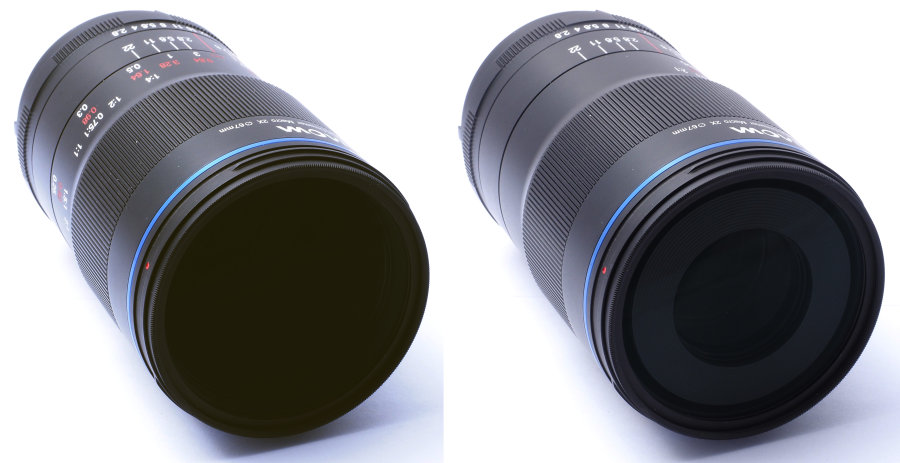
Figure 1. Laowa 100 mm f/2.8, focused at infinity (left) and 2x (right).
With a barrel length of 127 mm (in Nikon F mount) and a 67 mm filter mount, this is a rather large and
long lens (Figure 1). At 656 g, this is also a rather heavy lens.
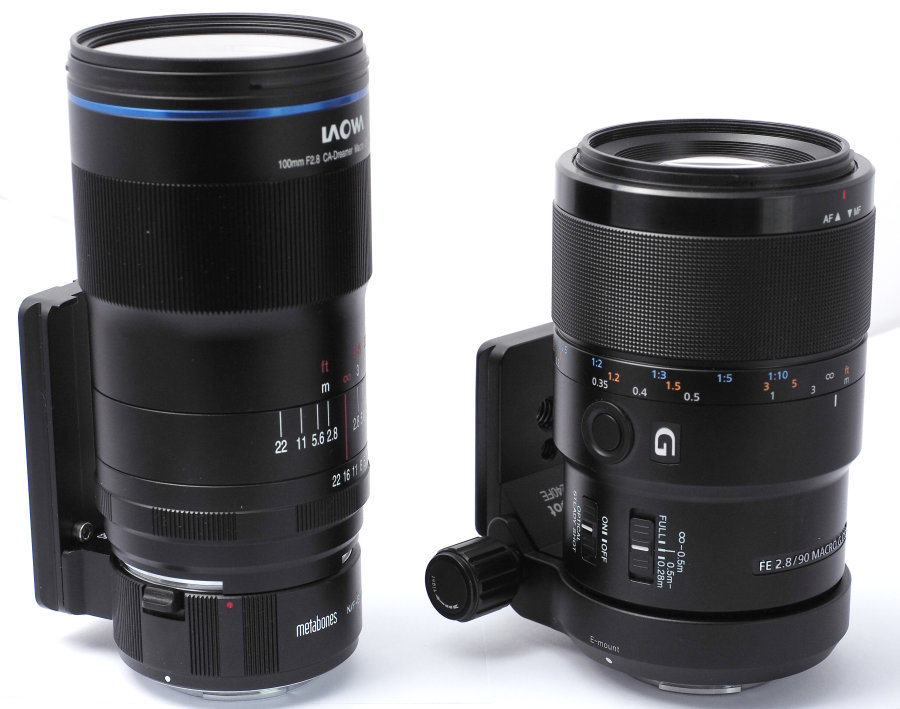
Figure 2. Laowa 100 mm f/2.8, Metabones adapter and Arca-compatible rail (left).
Sony 90 mm f/2.8 with third-party tripod collar (right).
A serious drawback of this lens is that it comes without a tripod collar, and also lacks a dedicated
groove for mounting a collar onto the lens barrel. At least two types of Laowa-branded collars for this
lens are available (one of them with a coarse metal surface inside the collar and puzzlingly devoid of the
customary hard‑plastic padding). Some buyers complain that the diameter of the collar is excessively
wide, and even when fully tightened the collar slides freely off the lens barrel. A picture on a Laowa web
site shows the collar mounted on the ring located between the aperture ring and focus ring, which is the
only place available for a collar on versions of this lens for mirrorless cameras. In any case, these
collars are clearly an afterthought and designed after the lens barrel had already been finalized.
For legacy reasons, several of my old SLR/DSLR lenses are in Nikon F mount, and when buying manual lenses
to use on a mirrorless camera I still prefer this mount. Also,
some of the most specialized lenses on the market are exclusively
available in this mount. My preferred solution for lenses devoid of a tripod collar is to mount them on
Metabones adapters equipped with a built-in short Arca-compatible shoe. To this shoe I often attach a
longer Arca-compatible rail that gives a better balance to the camera and lens (Figure 2, left). This adapter and rail add another 26.2 mm to the lens length and 228 g to its weight.
Other brands of adapters with a tripod shoe exist, but none of those I tried is satisfactory, particularly
the ones branded Fotga (their 1/4"-20 socket base is too small and easily twisted) and all types of
Viltrox adapters with field-removable shoe (also sold as Commlite and unbranded). The shoe of the Viltrox
adapters is roughly shaped and does not physically match the body of the adapter, causing the joint
between the two parts to wobble and misalign.
Metabones Nikon F to mirrorless cameras seem to have been discontinued years ago. Apparently, Metabones
prefers to sell much more expensive "smart" adapters, speed boosters, "expanders", and
the like. However, many Metabones "dumb" adapters are still available on the second-hand market,
and occasionally I vacuum the EU eBay site of the ones I most frequently use.
Individual lenses vary considerably in how well they fit the female Nikon F mounts of Metabones adapters,
and the leaf springs in the front mounts of these adapters must often be tightened to varying amounts,
which means in practice that each individual adapter must remain attached to the individual lens it is
adjusted to fit, and this in turn that, for each type of camera mount, I need up to a dozen individually
adjusted adapters.
A further thing to remember when buying second‑hand Metabones adapters is that the same adapters
were made, at different times, with and without tripod shoes, so you must make sure of what you are going
to buy. Many ads show stock pictures instead of actual pictures of the item for sale, and more than once I
received an adapter without tripod shoe that did not match the ad pictures.
With the adapter and additional rail, the Laowa 100 mm is longer (158 mm) and heavier (884 g) than, for
example, the Sony 90 mm f/2.8 G macro lens equipped with a third-party tripod collar (Figure 2, rightmost). The latter is 130 mm long and weighs in at 753 g with tripod collar. Although the Sony lens
has a slightly shorter focal length at infinity and only reaches 1x, it is equipped with autofocus, AF/MF
clutch, focus-by-wire with hard MF limits, optical stabilization, 3-position focus limiter and a focus
lock button, making it obviously more versatile, especially in non-macro photography. In addition, the
Sony 90 mm at 1x provides a higher working distance than the Laowa 100 mm at 1x (126 vs. 93 mm). In fact,
the only significant advantages in general specifications of the Laowa 100 mm over the Sony 90 mm are that
the former covers also the 1x-2x range and costs roughly half the Sony 90 mm. A comparison of the image
quality of the two lenses at 1x is available below.
The Laowa 100 mm comes with a 60 mm long, slightly flaring plastic lens shade, meant for use in non-macro
photography. In practice, this lens shade is useful only to prevent sunlight from directly striking the
protector filter mounted at the front of the lens (see below). In the non-macro range, the front lens
element is deeply recessed within the lens barrel, and hardly needs a lens shade. In the macro range, the
lens shade blocks the illumination of the subject and is essentially unusable. The lens shade is
bayonet-mounted around the end of the lens barrel, and can be reversed in place (albeit this hides the
magnification ring). The outer end of the lens shade does not accept a screw-mounted filter. For these
reasons, carrying the lens shade in the field is hardly justifiable. In non-macro photography in the
field, you can shoot without the protector filter whenever unlike striking this filter is a problem.
The lens in Nikon F mount is equipped with a 7‑blade mechanical diaphragm preset lever operated by
the camera body. On a camera devoid of this mechanism, the diaphragm operates fully manually. In my
specimen, the diaphragm aperture is slightly asymmetric at f/11 and above, but not enough to cause
problems in my use of the lens. The diaphragm of the 100 mm in other lens mounts varies in number of
blades and type of operation. With a total rotation of the focus/magnification ring of roughly 120°,
it may be a little difficult to manually focus at non-macro distances. In the close-up and macro range,
this ring is primarily used to change magnification, rather than focusing, so its limited rotation should
not be a problem.
If you are worried about bokeh and precision manual focusing at non-macro distances, Laowa makes a
105 mm f/2 equipped with variable internal apodization filter
and a focusing ring with more extensive travel, that may work better for you as a general-purpose lens.
The optical scheme of the 100 mm f/2.8 uses 12 elements in 10 groups, which is a little on the complex
side for a modern macro lens. The diameter of the front lens element is only 35 mm, and it is deeply
recessed (57 mm) within the filter mount and front of the barrel when focused at infinity. The front
optical assembly, including the diaphragm, moves forward when focusing and is just flush with the filter
mount at 2x. A rear floating group moves independently of the front assembly, but remains almost immobile
when focusing in the non-macro range. Thus, although this lens is described by Laowa, and in many reviews,
as providing internal focus, this is not quite true. Strictly speaking, an internal-focus lens does not
move its front element when focusing.
The lens comes equipped with a 67 mm protector filter screwed into the filter mount. The filter is mounted
in a low-profile ring, and reduces the working distance only minimally (about 3 mm). The lens operates
also without this filter, which is however useful, especially in the field, to prevent dust and
contaminants from entering the lens helicoid, which is otherwise exposed when the front optical assembly
retracts into the barrel. The original Laowa 60 mm f/2.8 2x possesses a very similar mechanism, plus a
long, grease-covered metal rod to operate the diaphragm, visible along the whole length of the lens
interior. I am grateful that this rod is absent, or hidden, in the 100 mm.
The 60 mm also has a rectangular metal baffle in place of the front filter. The internal sleeve of the 60
mm, visible through the baffle, is abundantly greased. Any small animal that wanders into the opening of
the baffle is likely to become smothered by the grease or wedged in one of the exposed slider slots. The
interior of the 100 mm is much cleaner, with hardly any grease in sight.
The Oshiro 60 mm f/2.8 2x is mechanically similar to the Laowa 60 mm,
but equipped with a permanently mounted front filter with a rectangular baffle painted on its rear
surface.
The working distance of the 100 mm with the filter is 71.5 mm at 2x, 93 mm at 1x, and 175 mm at 0.5x. In
spite of the wide filter mount, the high working distance helps when positioning light sources to
illuminate the subject. Because the optical front element is much narrower than the filter, at 1x and
higher it is possible to place light sources, or even a ring light, partly covering the surface of the
front filter without causing vignetting.
The current mechanical lens design of the 100 mm, with its front element deeply recessed within the outer
barrel at infinity, requires a wide opening of the outer barrel (hence the large filter mount) to avoid
vignetting. I believe it should be possible to redesign this lens to be similar to the
Laowa 25 mm Super Macro. This would reduce the present 67 mm filter mount
to less than half its diameter. An accordingly smaller lens shade could then be mounted at the tip of the
redesigned barrel, where it would move outward with the front element when the magnification is increased.
Image quality and resolution
In this test, I compare the image quality of the Laowa 100 mm at 1x with two other lenses: the
Sony 90 mm f/2.8 G macro and the
Nikon Printing Nikkor 105 mm A. The latter is my best lens at
this magnification. The test camera is a Sony Alpha 7R II with 42 Mpixel native sensor resolution. I shot
the test images with full electronic shutter and illumination from two small LED panels (Godox LED64). The
images are straight-out-of-camera JPGs, but reduced and cropped as necessary, and in the last stage the
original JPG quality was reduced to 85% for web publication.
The Laowa 100 mm was recently
tested at 1x and
2x by Robert O'Toole, who rated it as better at 1x than the Canon MP-E 65 1x-5x, and at 2x as "best performance vs price
ratio" and "image quality [...] a lot closer to the Rayfact 2x /Printing-Nikkor and Macro Varon than I
expected". He also remarked on its curvature of field, while the other two lenses used for the present
test produce a flat field. Curvature of field is more easily detected when imaging a very flat subject
perpendicular to the lens axis, and when shooting with the diaphragm fully open to get the maximum
possible resolution. Stopping down the lens causes more diffraction but also increases DOF, which may
suffice to mask a small amount of curvature of field. Focus stacking can effectively correct even high
amounts of this aberration.
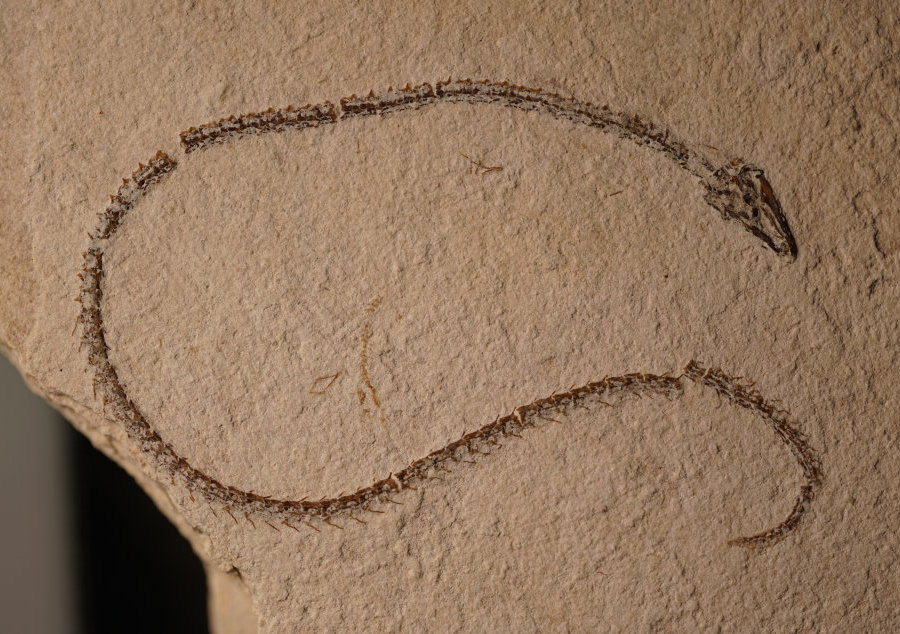
Figure 3. Test subject shot at 1x, reduced. Printing Nikkor 105 mm A at f/2.8.
The test subject is a fossil vertebrate skeleton on a mostly flat stone slab (Figure 3). A smaller, incomplete skeleton and loose bones are also visible near the center of the image. In spite
of this, parts of the subject are sufficiently three-dimensional to be out of focus, especially at f/2.8
and f/4. Therefore, I manually focused each lens, with the help of the camera's magnifier function and a
micrometric Z-axis rail, on the central part of the skull, and used this part as test area in all tests.
The crops shown below correspond to a subject area approximately 4.5 by 4 mm in size. Because of the
physically different tripod collars of these lenses, I had to manually re-frame with each lens.
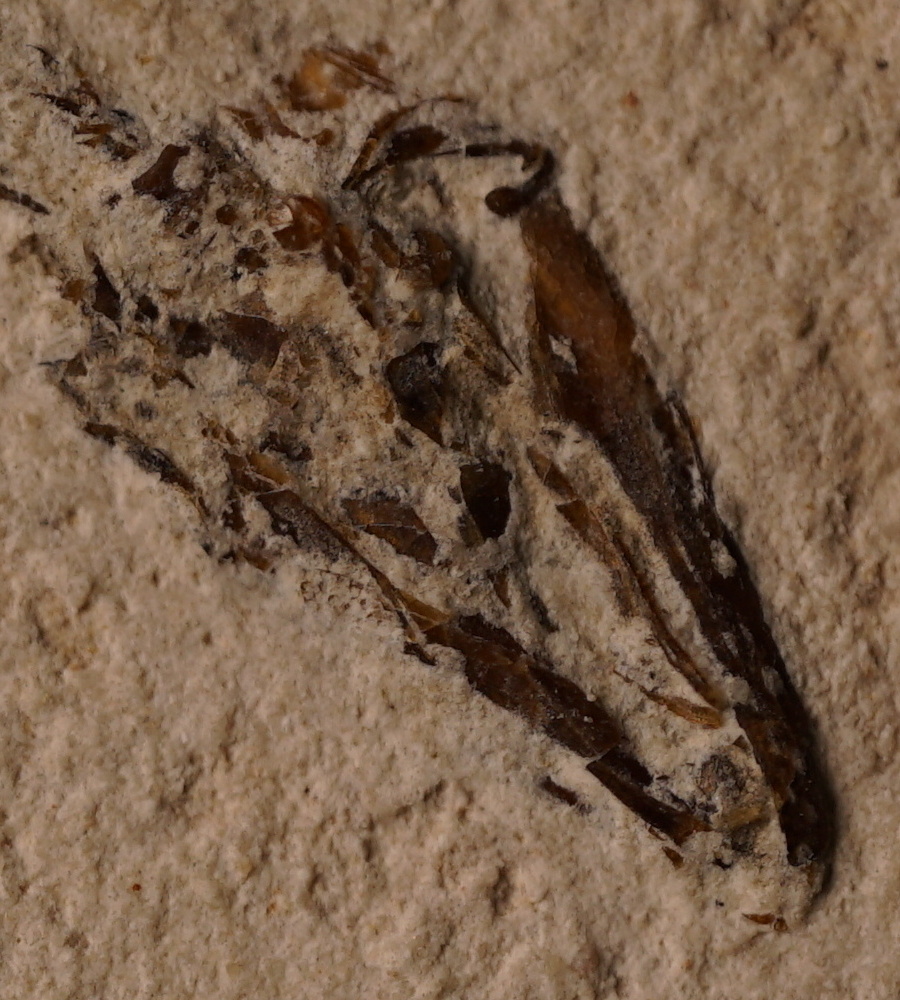
Figure 4. Skull of test subject, 900x1,000 pixels crop. Printing Nikkor 105 mm A at f/2.8.
As expected, the Printing Nikkor 105 mm (Figure 4) produces an image rich in
contrast and extreme detail, literally at the level of single pixels. In practice, with this camera and
the lenses I have available, it cannot get any better than this. The high resolution of the Printing
Nikkor also makes it easier to accurately focus. If the lens can only produce a slightly blurry image, it
is difficult to judge when the image is in best focus.
It is useful to remember that the Printing Nikkor 105 mm is a one-trick pony, in the sense that it is
designed to perform exceptionally well at 1x, but image quality degrades rapidly if magnification is
changed. The other two lenses being tested are designed for use at a broad range of magnifications.
Figure 5. Skull of test subject, 900x1,000 pixels crop. Sony 90 mm macro at f/2.8.
Quite different opinions exist on the image quality of the Sony 90 mm macro. In general, in close-up
photography I find this lens to perform reasonably well, although not excitingly so, and I do not
completely agree with those photographers who rate it as a piece of trash. I might agree that it is
overpriced for its image quality, which is not the same thing.
One thing I do notice is that, with the 90 mm set to maximum magnification (Figure 5), the 90 mm produces a slightly higher magnification than the Printing Nikkor 105 mm, which I
permanently keep mounted on a fixed stack of extension tubes chosen to give a magnification as close as
practical to 1x. This is, by design, the "sweet spot" of this lens. At least, we can tell that
Sony is not short-changing the owners of the 90 mm by giving them slightly less than 1x, like a few other
macro lenses do.
Figure 6. Skull of test subject, 900x1,000 pixels crop. Sony 90 mm macro at f/5.6.
Stopping down the 90 mm to f/5.6 does increase the amount of detail (Figure 6),
although naturally not as much as the Printing Nikkor at f/2.8.
Figure 7. Skull of test subject, 900x1,000 pixels crop. Laowa 100 mm macro at f/2.8.
The Laowa 100 mm at f/2.8 (Figure 7) does show better detail than the Sony 90 mm
at the same aperture. The Laowa 100 mm has no hard focus stop at 1x, and setting this lens to 1x involves
some guesswork, but it looks like I did not miss 1x by much (I used the colon in the "1:1" marking as a
reference).
Figure 8. Skull of test subject, 900x1,000 pixels crop. Laowa 100 mm macro at f/5.6.
Stopping down the 100 mm to f/5.6 shows a higher amount of detail (Figure 8),
although this is partly due to the increased DOF. The above picture does remind me of the image quality of
the Printing Nikkor, as mentioned in other reviews of the 100 mm. At any rate, at both tested apertures,
the Laowa 100 mm is clearly better than the Sony 90 mm.
Color and contrast
Contrast and color rendering are comparable in the three tested lenses, with the Sony and Nikon lenses
slightly brighter and just a little bit colder. The Laowa may display a slightly lower contrast in dark
areas, but nothing that a small adjustment in post-processing cannot take care of.
Aberrations
Other tests on the web show that the Laowa 100 mm has a good control of both axial and lateral chromatic
aberration. This is a major improvement on the original Laowa 60 mm f/2.8 2x, which shows evident axial
chromatic aberration.
The test described here does not include geometric distortion, but other tests I carried out (not
displayed here) show that the Laowa 100 mm is an improvement on the Laowa 60 mm also in this respect.
The Laowa 100 mm does show curvature of field, but at 1x this aberration is fairly small, and only visible
in the image corners at f/2.8 with the present test subject. At f/5.6, DOF becomes sufficient to hide this
aberration without requiring refocusing.
Musings on the Sony 90 mm macro
Macro lenses tend to be optically the best lenses available among the inventory of a given brand. This is
true of the large majority of well-known brands. Sony appears to be an exception to this trend. It is
legitimate to ask whether the Sony 90 mm lens redeems itself when tested in different conditions,
specifically at magnifications lower than 1x. This, however, is not within the scope of the present test.
One could also question whether pixel-peeping a 42 Mpixel image is a realistic way to test a macro lens.
Admittedly, web publication rarely needs more than 4-5 Mpixels of real resolution, and images to be
printed on paper at sizes and quality common on scientific journals rarely need more than 1-2 Mpixels. On
the other hand, with full-frame camera sensors currently heading toward 100 Mpixels, such tests are now
feasible, and there are indeed lenses that satisfy these requirements - albeit most often they are
expensive, special-purpose lenses that need to be adapted for use on a camera, rather than ready-to-use
camera lenses. Also, the usefulness of being able to strongly crop an image in post-processing while
keeping an acceptable image quality should not be underestimated.
As a whole, it cannot be denied that something is wrong with the Sony 90 mm at 1x, since it is marketed as
a macro lens capable of this magnification. In fact, it is currently Sony's only full-frame macro lens in
the premium G (not GM) line. Its failings are visible on all current Sony Alpha cameras, so most users of
this lens do become aware of its limitations. It is also remarkable that the Laowa 100 mm, costing only
half as much, provides a clearly better image quality. Hopefully, we will eventually see a better macro
lens from Sony.
Conclusions
The Laowa 100 mm delivers a remarkably good image quality at a reasonable price, and reaches 2x
effortlessly and with a reasonably high working distance. At 1x it produces a significantly better
amount of detail than the Sony 90 mm f/2.8 G macro. I recommend the Laowa 100 mm as a nearly ideal
full-frame lens for magnifications up to 2x. This lens is also a good complement to the magnification
range of the Laowa 25 mm f/2.8 2.5-5x macro, with the two lenses providing an almost uninterrupted range
of magnifications from infinity focus to 5x.