Nikon Z TC-2.0xThe Nikon Z TC-2.0x is a 2x teleconverter for selected Nikon Z lenses. On an earlier page, I discussed the TC-1.4x Z teleconverter. Among the latest Nikon F teleconverters, I discussed the TC-14E III, TC-17E II, and TC-20E III. I tested the TC-2.0x with Z 100-400 S mounted on a Z8 camera (see below). With this teleconverter, the maximum effective lens focal length is 800 mm, and the effective lens speed (as reported in the image EXIF) f/11. I further tested the TC-2.0x with a Z 600 mm PF S and the same camera (effective 1,200 mm and f/12.6). Curiously, with the 600 mm and TC-2.0x, the Z8 reports an f/13 effective aperture fully open, then after stopping down one click of the secondary dial, it still reports f/13. If one measures the aperture in intervals of 1/3 of a stop, stopping down by 2 stops from f/6.3 yields f/12.6, reasonably approximated to f/13. However, stopping down two-and-one-third stops or two-and-a-half stops from f/6.3 should both be approximated to f/14 (e.g., see Wikipedia). The TC-2.0x in practiceThe TC-2.0x weighs 270 g and adds 32.5 mm of extension between camera and lens. This is relatively compact for a modern 2x teleconverter. Like in the TC-1.4x, the rear optical element is large, strongly convex toward the camera sensor, and surrounded by a baffle. The front element of the TC-2.0x is much smaller than the front element of the TC-1.4x, as typical of all 2x teleconverters. 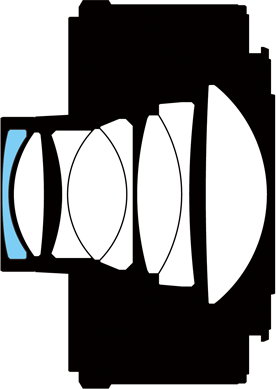
The TC-2.0x uses 8 elements (of which one aspheric, blue in the above figure) in 5 groups. The optical path through the teleconverter crosses preponderantly glass, rather than air. In other words, the optical elements are remarkably thick and closely spaced together. 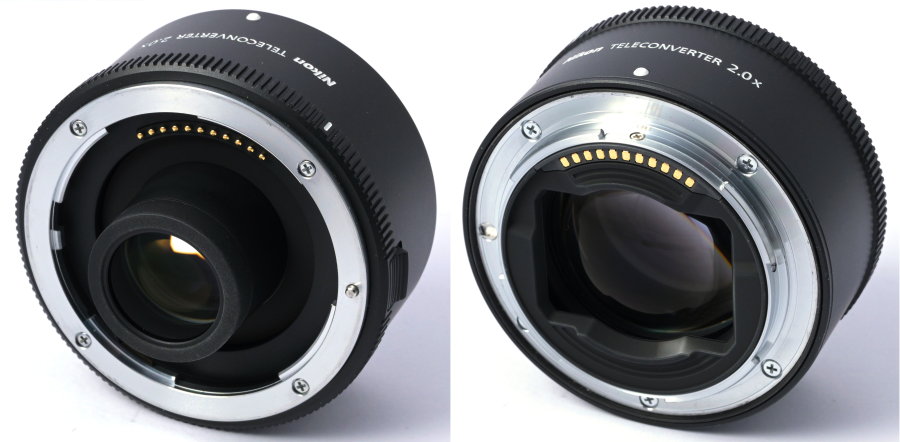
The internal metal barrel of the TC-2.0x, covered at its end by a rubber sheath, protrudes by about 12.5 mm from its front bayonet. This makes the teleconverter physically incompatible with lenses that have rear optical elements mounted close to their rear bayonet. For this reason, Nikon equips its Z and its modern F teleconverters with an extra bayonet lug that mates with a notch on the rear mount of lenses compatible with these teleconverters. The protruding front optics of the TC-2.0x require the special Nikon BF-N2 front cap for teleconverters (also used on the TC-1.4x). You cannot stack two Nikon Z teleconverters atop each other. Behavior with CPU and non-CPU lensesLike the TC-1.4x, the TC-2.0x can be used with non-CPU lenses, or even without any lens mounted on the teleconverter. In the latter case, the teleconverter does not produce an image, but it happily lets you shoot anyway. As soon a you attach something with CPU electrical contacts at the front of this teleconverter, instead, the teleconverter checks if this "something" is on a list of Nikon-approved equipment, and if it isn't, it locks the camera until the offending equipment is removed. One of these non-approved items is the FTZ or FTZ II lens adapter. If you physically modify the rear bayonet of the FTZ or the front bayonet of the TC-2.0x to make them physically compatible, the TC-2.0x still reads the electronic data from the FTZ/FTZ II, and still locks the camera. To get around this problem, simply use a "dumb" lens adapter without electrical contacts, instead of an FTZ. Make sure that the dumb adapter is properly made and does not short-circuit the electrical contacts of the teleconverter. This also implies that you cannot use a Z teleconverter with an adapted Nikon F lens in order to get autofocus. You must use Nikon F teleconverters (mounted on an FTZ/FTZ II) with compatible Nikon F lenses, and Nikon Z teleconverters with compatible Nikon Z lenses. It is as simple as this. Pro-level Z cameras can reliably autofocus with lenses of effective aperture up to f/8. "Lower" Z camera models usually have a limit of f/5.6. Any effective lens speed higher than these limits means that the camera will make a "best effort" to autofocus (typically by switching from phase AF to contrast AF), but the AF speed, precision and success are not guaranteed. Having said that, I can add that I usually shoot with the Z 600 mm f/6.3 PF and TC-2.0x (effective 1,200 mm and f/13) on my Z8, hand-held and in good sunlight, and I get a keepers rate of 80% or better (see also the figures below). Weather sealingThis teleconverter is fully weather sealed. Image qualityI currently own two lenses that accept a Z teleconverter. Both are S-series lenses (600 mm PF S and 100-400 mm S). Their performance with the TC-2.0x is briefly discussed in their respective reviews. The following figures show a further example of the image quality of the Nikon Z 600 mm PF with TC-2.0x on a Z8 (45.7 Mpixel JPG image, straight out of camera). 

In particular, it is worth noting the complete lack of visible lateral and axial chromatic aberrations in the above test image. Another legitimate question is how the 600 mm PF with TC-2.0x performs when focused close to its minimum focusing distance of 4 m. 
focused at slightly more than 4 m, whole image, reduced. 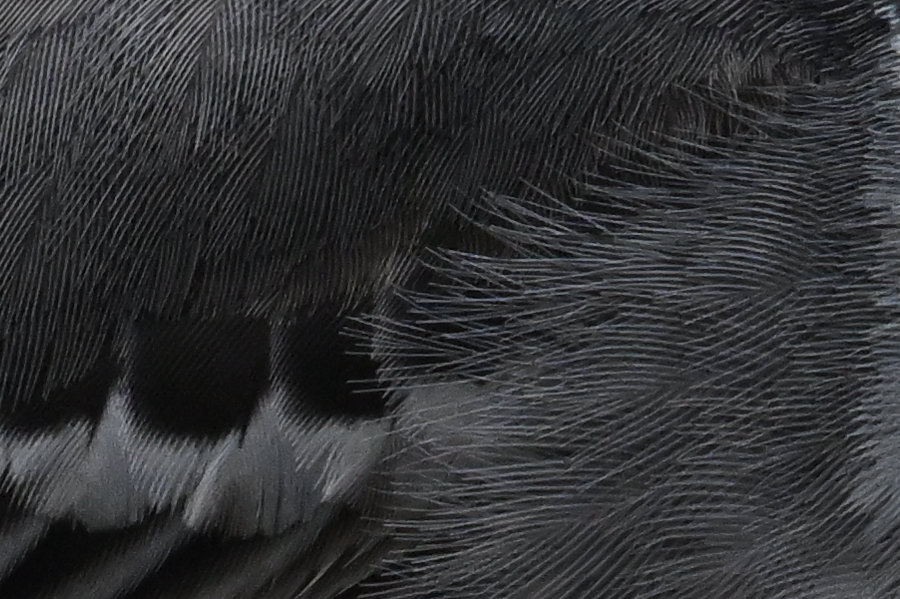
focused at slightly more than 4 m, 1:1 pixel crop. Also in this case, the combination of 600 mm PF and TC-2.0x passes the test with flying colors. As a whole, my tests show that a lens capable of very high image quality, like the 600 mm PF, coupled with the TC-2.0x, in optimal conditions and on a good camera like the Z8 produces outstanding results. The 100-400 mm, on the other hand, is a very good lens, but not superlative like the 600 mm. The 100-400 mm at the 400 mm focal length can be used with the TC-2.0x and the results are very good, and fully usable for almost all purposes even after significant cropping.
I used to own a Z 180-600 mm zoom, but was never really satisfied with its image quality and AF
performance and precision in the 500-600 mm range of focal lengths. I was even less satisfied with the
image quality of this lens when coupled with the TC-1.4x, and by the time I acquired the TC-2.0x I had
already traded in my 180-600 mm for better equipment. I strongly doubt it would have worked satisfactorily
with the TC-2.0x. ConclusionsLike all 2x teleconverters, the Nikon Z TC-2.0x teleconverter multiplies the focal length of a lens by a 2x factor, and subtracts two stops of lens speed. The optical quality of this teleconverter is excellent. The optical quality of the lens it is used with is much more important than in the case of 1.4x teleconverters. |