Nikon Z 24-70 f/4 SThe 24-70 mm f/4 S, launched in 2018, was the first "normal zoom" lens in the S series for the Nikon Z system. It offers a 2.9x zoom range, and still remains an excellent choice for a relatively small, lightweight and affordable constant-speed normal zoom, as long as an f/2.8 zoom is not required. Compared to the equally excellent 24-120 mm f/4 S, it is significantly smaller (88.5 mm long and 77.5 mm diameter, versus 118 mm long and 84 mm in diameter), slightly lighter (500 g versus 630 g) and more affordable. The main advantages of the 24-120 mm over the 24-70 mm are that the former offers a substantially larger zoom range (5x) and maximum focal length. Three minor differences are that the 24-120 mm has a configurable L-FN button, a dedicated by-wire focus ring (in addition to the function ring), and a small LCD display, while the 24-70 mm has none of these. Neither lens accepts a Nikon Z teleconverter. While the 24-120 mm feels proportionate and well-balanced on the Z8, the 24-70 mm feels better on a smaller camera body. I use it mostly on my DX Z50 II, where it is equivalent in field of view to a 36-105 mm on FX, and complements well the DX 12-28 mm f/3.5-5.6 PZ. The latter is, at present, the widest DX wide-angle zoom in the Z system. These two lenses make a versatile and small travel kit for the Z50 II on pleasure trips and vacations. As a third lens, I may add either the Z MC 105 mm (if I plan some macro work, but also as a medium telephoto), or the 100-400 mm S (if I plan some wildlife shooting). If birds are going to be the main subject, I try to carry with me the 600 mm f/6.3 PF instead of, or in addition to, the 100-400 mm. The 24-70 mm f/4 S is an FX lens, and its optical quality is fully adequate for use on a Z9, Z8 and Z7 II. I occasionally use this lens on my Z8 when it is necessary to reduce the weight and volume of this camera kit to a minimum. The 24-105 mm remains a better choice when I anticipate the need for a short telephoto lens but cannot carry a telephoto zoom like the 100-400 mm S. Neither the 24-70 mm S nor the 24-120 mm S are equipped with in-lens VR. Both lenses rely on sensor-based VR when mounted on an FX Z camera, which is fully adequate at these focal lengths. At present, no DX Z camera is equipped with sensor-shift VR, so DX cameras cannot apply VR when using these two lenses.
Photographers are now used to regard VR as one of the basic necessities of (photographic) life. On the
other hand, camera makers point out that VR is not really necessary with focal lengths lower than 80-100
mm, even when hand-holding, unless one is doing outdoors night photography, or shoots in low-light
interiors where electronic flash is not allowed.
The 24-70 mm f/4 S in practice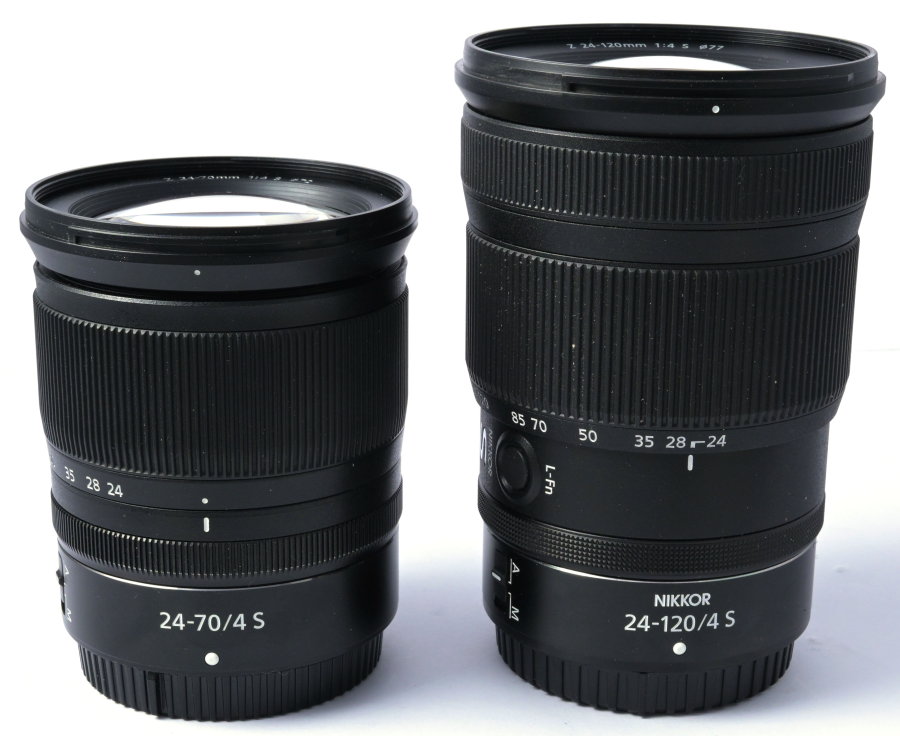
The 24-70 mm is shown in stowed (collapsed) configuration. 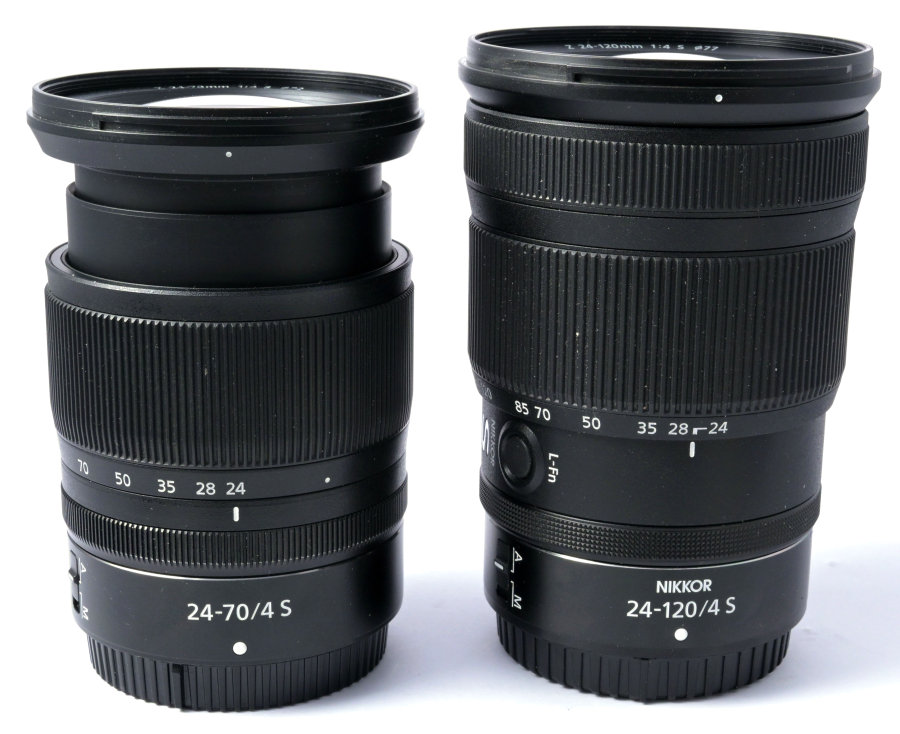
Both lenses at 24 mm. 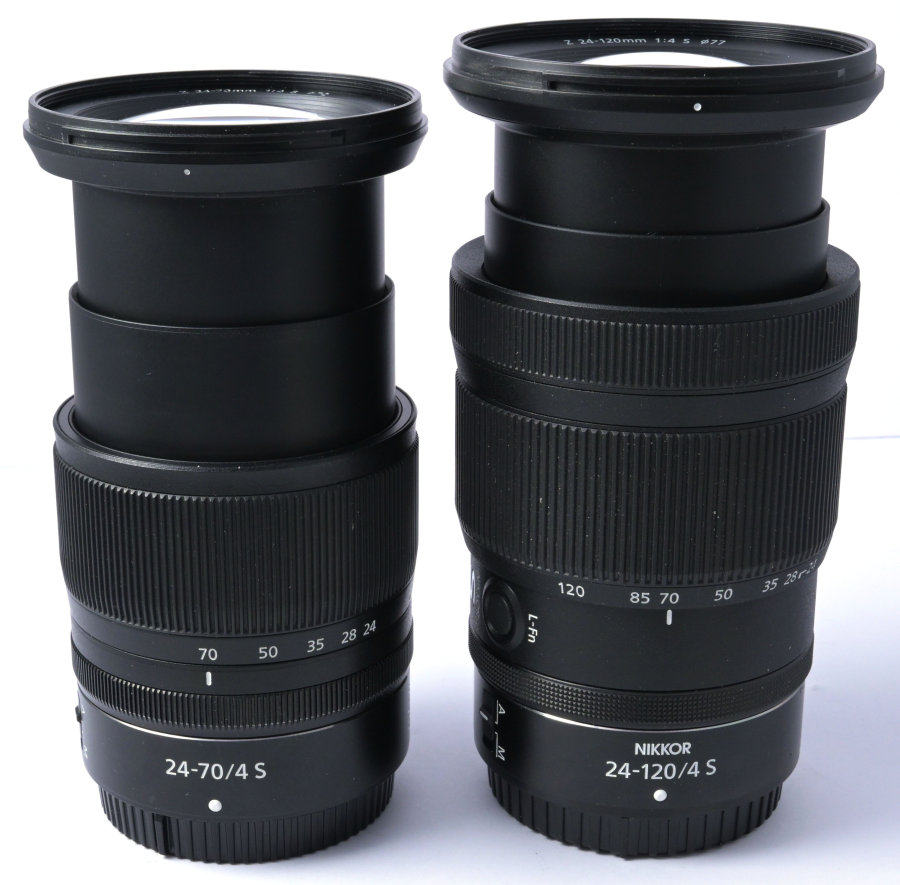
Both lenses at 70 mm. The 24-70 mm achieves its relatively short physical length (Figure 1) thanks to a stowed configuration, 88.5 mm long. Before the lens can be used, its zoom ring must be turned from the stowed position to the desired focal length. This causes the front of the lens to extend and the physical lens length to increase to 108 mm at 24 mm FLfocal length (Figure 2), and to further increase to 138 mm at 70 mm FL (Figure 3). This lens uses two coaxial extending plastic barrels. It displays no wobble of the lens front at 24 mm FL, and a barely perceptible wobble at 70 mm FL. From the above figures, it is evident that the 24-70 mm, at any given focal length, is only a little shorter than the 24-120 mm at the same focal length. The stowed configuration (which is not available in the 24-120 mm) is the main factor that makes the 24-70 occupy a significantly smaller space in a camera bag. If your camera bag/backpack has enough space available to store this lens zoomed to 24 mm, instead of fully collapsed into its stowed configuration, nothing prevents you from doing so. This should also reduce the likelihood that dust will enter the lens interior when extracting it from storage and un-stowing it. Alternatively, you could collapse the lens during lengthy travel and use the extra space for something else like a teleconverter, then store the lens un-stowed once you arrive on location. The filter mount is 72 mm (versus 77 mm in the 28-120 mm). The maximum subject magnification is 0.3x (0.39x in the 24-120 mm). Oddly, the function ring of the 24-70 mm is sculptured like a focus ring, not like the function rings now typical of Z lenses. Perhaps this is because this lens was designed quite early in the development of the Z system, before the sculpturing of function rings became more "standardized". 
The optical scheme uses 14 elements in 11 groups, of which one ED element (yellow), one aspherical ED (orange) and 3 aspherical elements (blue). This lens has no in-lens VR, but of course supports in-camera VR on camera models equipped with this feature, by electronically reporting to the camera its current zoom setting. FocusingFocusing uses a nearly silent stepper motor. Autofocus is fast. Servo focus motors were preferred to stepper motors in the past, in part because stepper motors of the time were noisy and incapable of very small steps. At present, these problems have been minimized, and stepper focus motors are becoming more and more common, especially where they need to move lens assemblies by long distances. This lens lacks a dedicated focus ring. The function ring is configured by default to work as a by-wire focus ring, but can be reconfigured in the camera menu. The focusing speed varies dynamically with the rotation speed of this ring. Turn it slowly for precision focus, quickly to perform large changes of focus distance. Lens controlsThe only other control on this lens is an AF/MF slider near the lens mount. In the AF position, manually turning the control ring (if left configured as default) overrides the autofocus. Image qualityThe following samples were shot hand-held with the 24-70 on a Nikon Z8, at 24, 35 and 70 mm focal lengths (as indicated on the zoom ring) and 200 ISO. Center image quality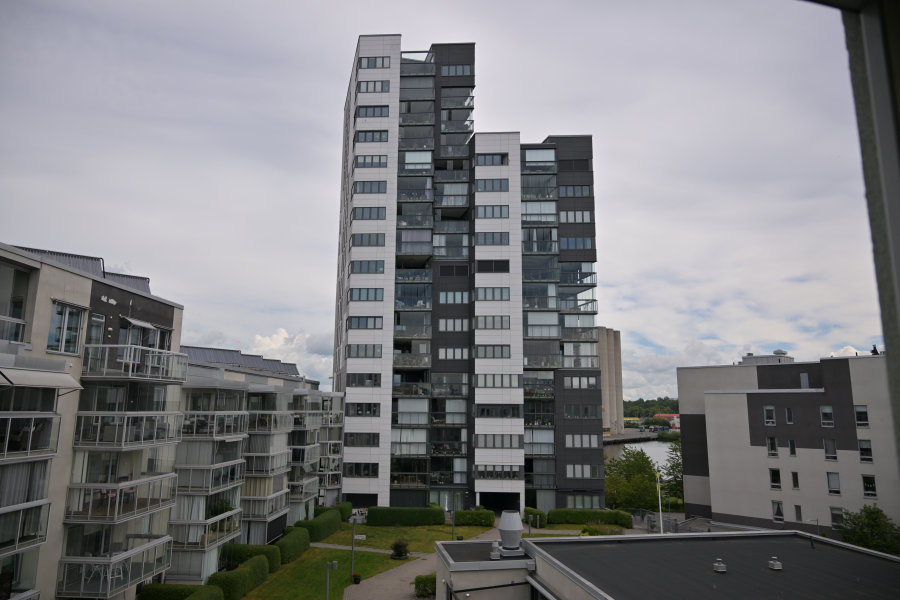

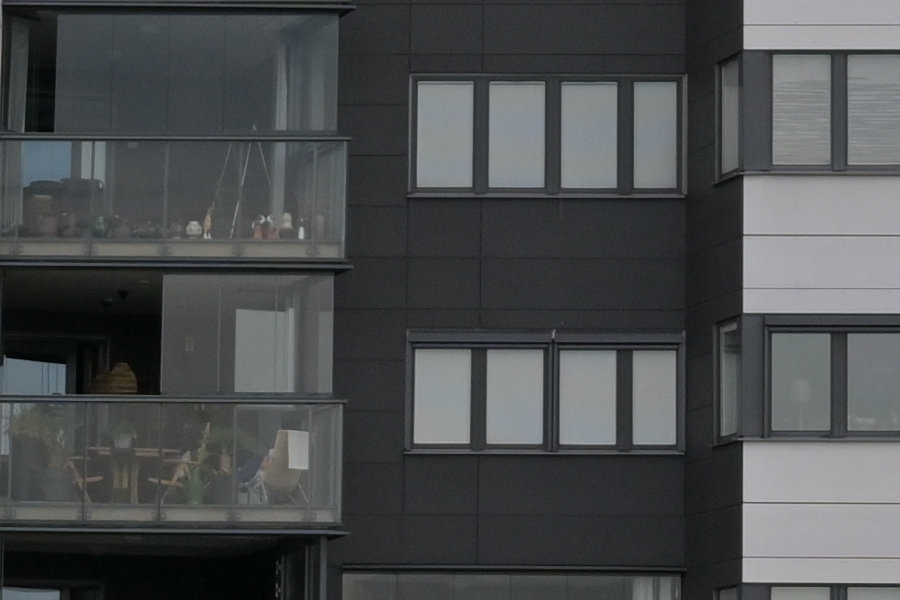

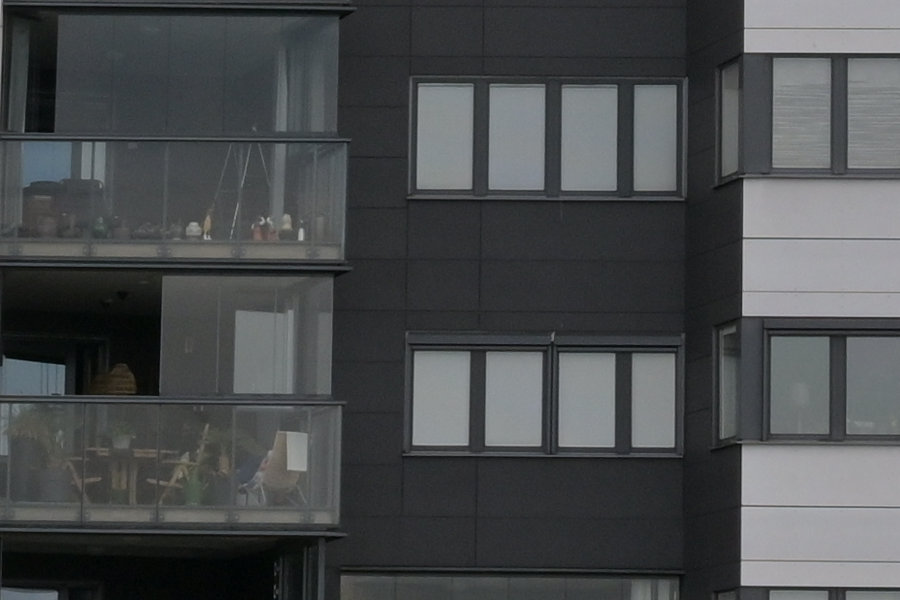







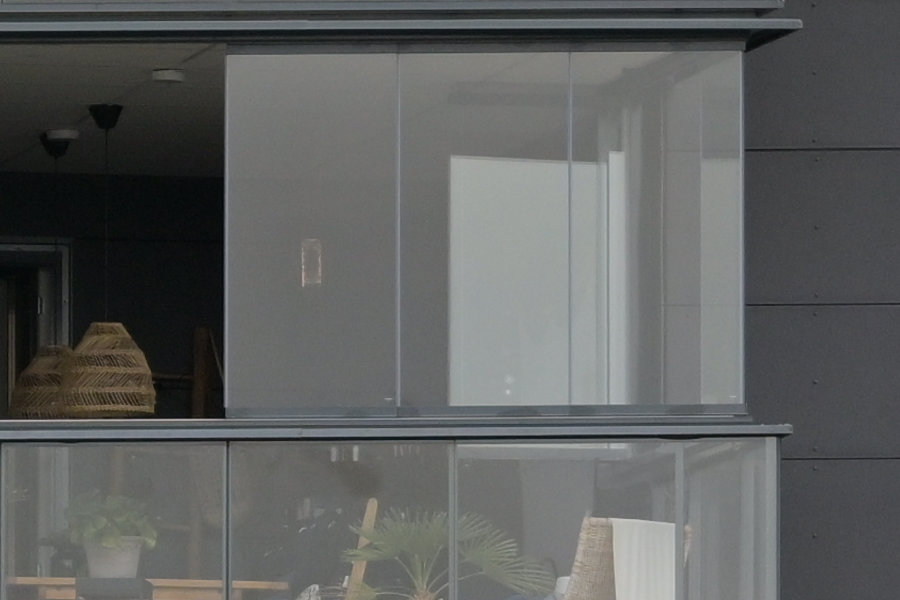
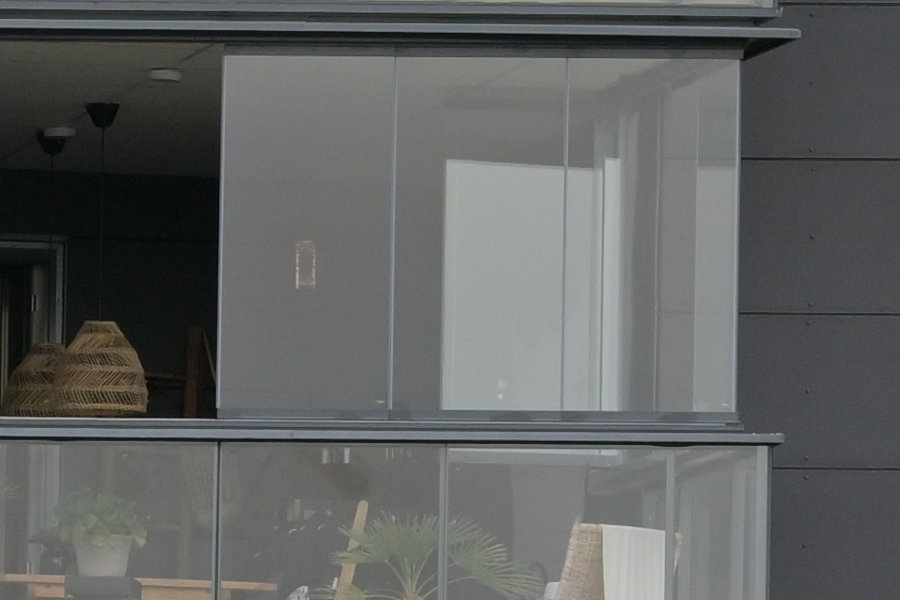
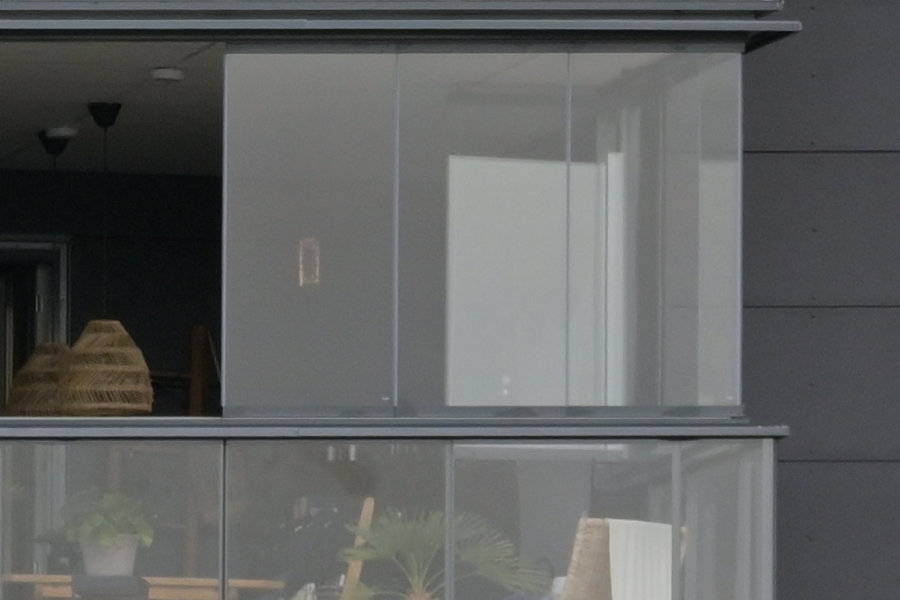
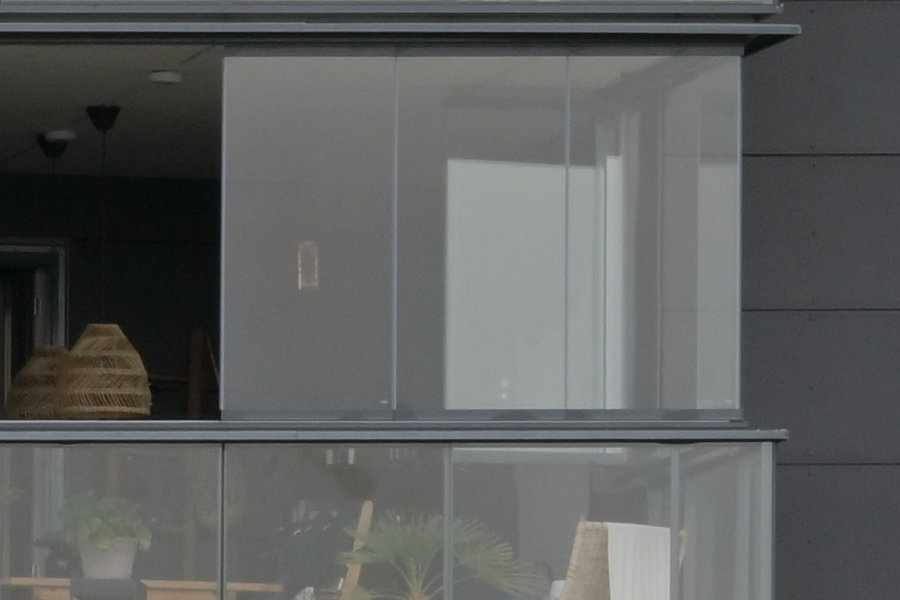
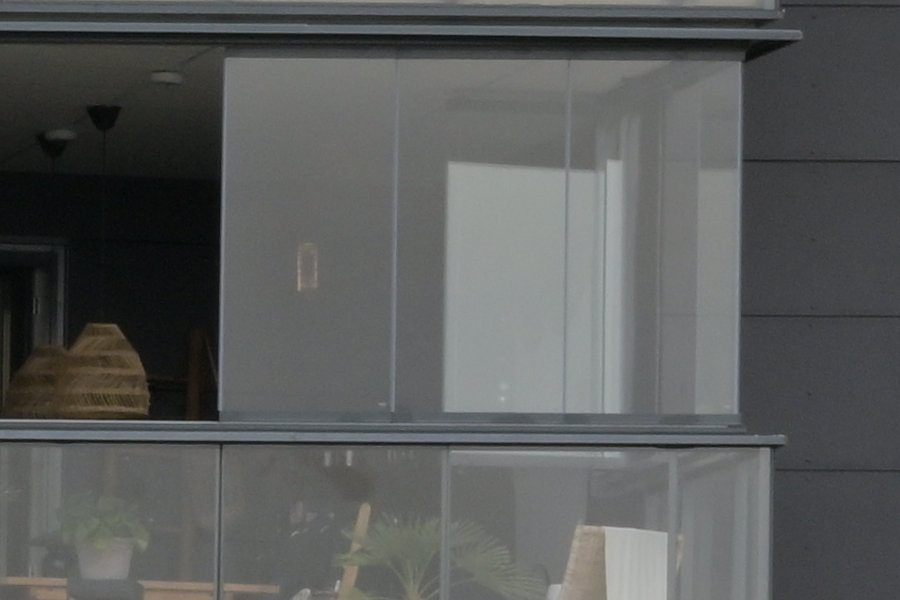
The 24-70 at 24 mm displays much the same image resolution from f/4 to f/11, and a barely perceptible worsening at f/16. At 35 mm, the 24-70 at f/4 is slightly worse than at f/5.6. It remains optimal up to f/16. At 70 mm, the 24-70 is very slightly fuzzy at f/4, then improves at f/5.6, worsens again at f/8 (in both test shots at this aperture, only one of which is shown in Figure 12), returns to its optimal level at f/11, then worsens againg at f/16 (as expected). As a whole, the 24-70 does not display the same excellent resolution at all focal lengths and at all apertures between f/4 and f/11 that I experience with the Z 24-120 mm f/4. The difference is small and you will not see it unless you pixel-peep, but it is visible in 45.7 Mpixel images shot with the Z8. It would be less visible on a 24.5 Mpixel FX camera. This is probably one of the reasons why the 24-70 commands a much lower second-hand price than the 24-120.
Does this difference matter in practice? With a super-telephoto lens, the feasibility of substantial
cropping is very important because likely you are using your longest lens, and quite possibly a 2x
teleconverter as well. Probably you are not routinely doing the same extreme cropping with pictures from
the 24-70 mm, because lenses moderately longer than 70 mm are not that expensive. At the same time, with
the 24-120 you know that the image quality is there at all focal lengths and reasonable apertures, should
you need it, but this lens is larger, heavier, and more expensive. Weight and price are balanced by the
wider range of focal lengths of the 24-120.
Corner image quality at 24 mmAs typical of medium zooms, corner performance shows its limitations at the shorter focal lengths. Therefore, I only discuss the corner performance at 24 mm. 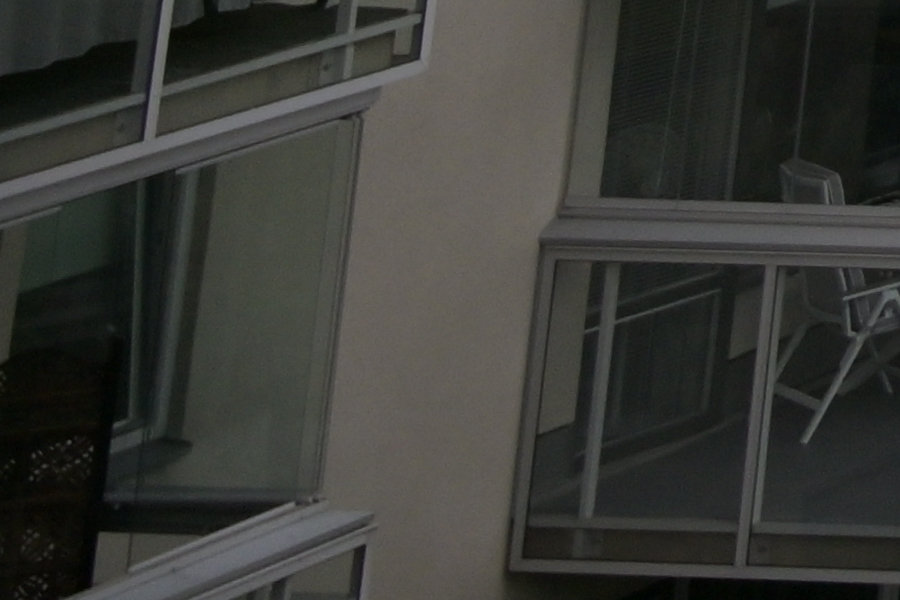
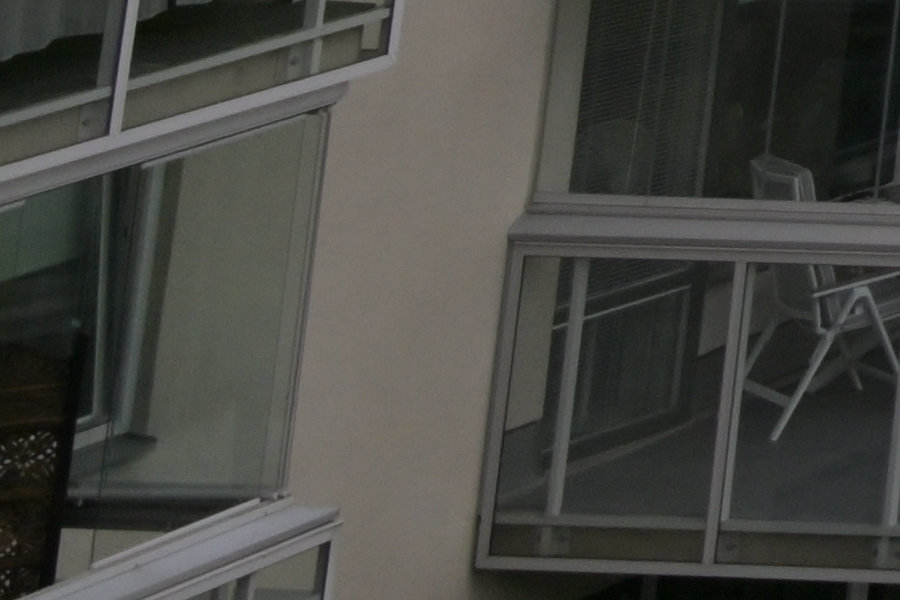
The above two figures show 1:1 pixel crops of the extreme lower left corner of the image at 24 mm focal length. The image framing is slightly different in the two test image, because they were shot hand-held. Image quality in the corners is a little worse than in the center, but still within acceptable limits from a reasonably priced early S-series "medium zoom" lens at its widest focal length. Stopping down by two stops improves the corner resolution only slightly. The camera automatically compensated for the darkening in the image corners. The corners at f/4 are not compensated for by the camera to the same extent as at f/8, but the "extra" amount of remaining darkening at f/4 is modest. Alternatives to the 24-70 mm f/4 SThe 24-120 mm f/4 S is an obvious alternative, with a wider zoom range, a higher weight and physical size, and a higher price. For a comparison of the 24-70 mm with the 24-120 mm f/4, see the introductory section of this page and my review of the 24-120 mm. If you feel that nothing short of an f/2.8 medium-zoom will do for your needs, then the lens for you is probably the 24-70 mm f/2.8 S II, remarkably lightweight and equipped with internal zooming (but also physically long). See its review on photographylife.com. Alternatively, a second-hand specimen of version I of the 24-70 mm f/2.8 S is significantly cheaper. This version is heavier and extends in length while zooming. See its review on photographylife.com. Verson I is equipped with a small LCD display, which disappeared in version II. New versions of S lenses, as well as recently introduced S lenses, often (albeit not always) do away with this LCD display. My opinion of this display is that it is largely useless. For one thing, it increases the total number of LDC displays to keep track of. Additionally, the two LCD displays of high-end Z cameras (or the single LCD display of consumer-level Z cameras) are already perfectly capable of displaying the same information shown by the lens display. I believe this additional display was invented by some manufacturers to increase the "luxury feel" of their lenses, and Nikon just followed suit without enough critical thinking. This display runs contrary to the general trend by Nikon and other mainstream brands of eliminating physical lens features and controls, and replacing them with in-camera features and controls. The Nikon Z 28-75mm f/2.8 (non-S) is a third alternative, at the opposite end of the price range as the 24-70 mm f/2.8 S II. This lens is very likely made by Tamron for Nikon, and uses the same optics as the older Tamron 28-75 mm f/2.8 Di III RXD. The Nikon-branded variety is significantly more expensive than the Tamron-branded one. On the other hand, the Nikon-branded variety is more likely to work seamlessly with Nikon cameras, and unlikely to be disabled by future Nikon camera firmware updates, while this risk is higher with Tamron- and third-party-branded lenses. See the review of the Nikon-branded variety of this lens at photographylife.com. A few other Nikon Z non-S lenses, as well as third-party lenses, could also be regarded as alternatives to the 24-70 f/4 S (e.g., I briefly discuss the Nikon Z 24-50mm f/4-6.3 above). However, I have no hands-on experience with them. My preferred use for the Z 24-70 mmI use both FX (Z8) and DX (Z50 II) Nikon Z cameras. The Z8 gives me the best capabilities, and the Z50 II a physical size and weight similar to the Micro 4/3 cameras I used for several years, until I switched to Nikon. The Z50 II also gives me only slightly smaller sensels than the Z8 (albeit of course less than half the total number of sensels of the Z8), the same Expeed 7 processor of the Z8, and fairly similar firmware, menus, and layout of physical controls as the Z8, minus some functionality supported only by the Z8 and Z9 hardware. In fact, the Z50 II is the first DX Z camera that I regard as powerful and "serious" enough to use. It is not a "mini-Z8" nor a "mini-Z6 III", but not so far behind that it should deserve to be ignored, either. See, for example, the review on DPreview. Although the 24-70 mm S is an FX lens, it also works on DX cameras. This lens happens to complement well the Nikon Z DX 12-28 mm f/3.5-5.6 PZ wideangle zoom I chose for the Z50 II (there are no other reasonable choices, in spite of the plastic bayonet of this lens). In addition, DX uses only (roughly) the central half of an FX sensor area. This means that the not-so-good corners of the 24-70 mm at its wide end are not used by the Z50 II. These two lenses, on DX, give me roughly the equivalent field of view of 18-40 mm and 35-105 mm on FX, respectively. The 24-70 mm is also small and lightweight enough to look and feel proportionate on the physically small Z 50 II. The 24-120 mm f/4, in comparison, feels too physically large for a medium-zoom on this DX camera. ConclusionsThe Nikkor Z 24-70 mm f/4 S is the original medium-zoom in the Z system. It is often sold as a kit with most FX Z camera models. If its zoom range and f/4 speed are adequate for your needs, and purchasing this kit saves you a significant sum compared to buying the camera body and lens separately, there is no reason to look for a different medium-zoom. On the other hand, if you do need an f/2.8 constant aperture or a wider zoom range, there may be better choices, but they will be bigger, heavier and more expensive. The Nikkor Z 24-70 mm f/4 S is optically slightly worse than the Z 24-120 mm f/4 S. If you need maximum image resolution in the center, you need to stop down the 24-70 mm to f/5.6, while you can use the 24-120 mm fully open. However, you cannot see this difference unless you pixel-peep 1:1 pixel crops of test images, or blow up images to poster size. The 24-120 mm S is significantly more expensive (especially on the second-hand market), physically larger, and heavier. The amount of darkening in the corners not fully compensated for by the camera is higher with the Nikkor Z 24-70 mm than with the Z 24-120, especially at f/4. The Nikkor Z 24-70 mm f/4 S provides an overall good image quality, and a fast and almost silent AF. This lens is not equipped with in-lens VR. It is not a major fault because sensor-based VR is available in the large majority of Z cameras, and is fully adequate within this range of focal lengths. In-lens VR could be more useful with cameras like the Z50 II, which lacks sensor-shift VR. On the other hand, I routinely use this lens on my Z50 II, and rarely miss the presence of sensor-based VR in this camera. The Z 24-70 mm f/4 S lacks a dedicated focus ring. The function ring of this lens is configured by default to work as a by-wire focus ring. This seems to suit well the large majority of the users of this lens. |